
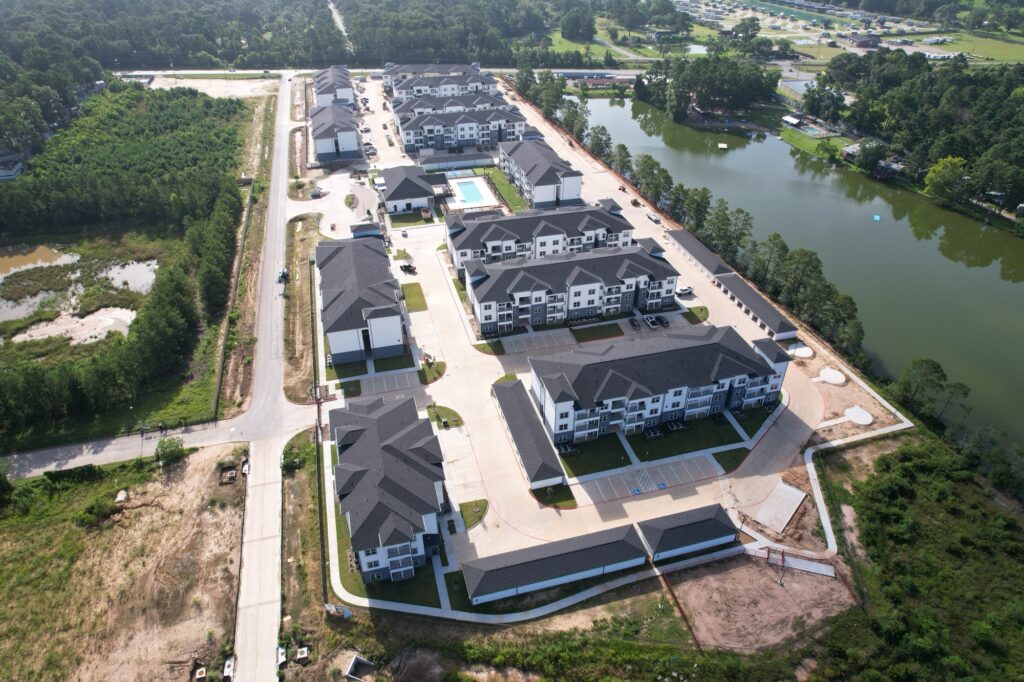
As experienced multifamily developers with Arbor Rose Capital, we specialize in garden-style multifamily projects. With deep expertise in the multifamily space, we offer this nuanced perspective on how different multifamily building types align with varying population densities.
Both developers and investors in the multifamily space should have a good understanding of various typologies that exist in this space to determine project viability. Drawing from both industry insights and our firm’s hands-on experience, here’s an exploration of various multifamily housing developments.
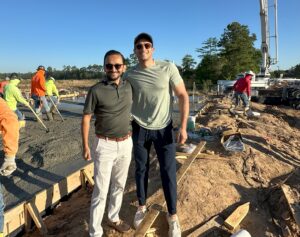
Photo: Arbor Rose At Porter – First Pour
Garden-Style Apartments (Low-Rise)
Photo: Arbor Rose At Porter
Definition: Typically one to three stories high, these low-rise buildings are spread across expansive landscaped grounds.
Ideal Population Density: Low to medium.
Design & Layout: Features multiple entrances and staircases, promoting privacy and a community-oriented atmosphere. Units often include patios or balconies overlooking green spaces. Garden style apartments come in all shapes and sizes with class types ranging from Class A to Class D – Class A properties are the highest quality, offering newer construction and luxury features, while Class D properties are the lowest quality and often older, less well-maintained, and minimal amenities.
Amenities: Varying by class type, amenities commonly seen include swimming pools, playgrounds, picnic areas, pet parks, pet yards, and ample parking.
Pros:
- Abundant open space and a quieter environment.
- Offers a suburban feel, appealing to families and retirees.
Cons:
- Requires larger land parcels, limiting feasibility in dense urban areas.
- Often necessitates car dependency for commuting and accessing amenities.
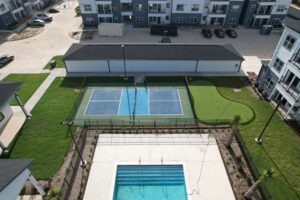
Photo: Arbor Rose at Porter
Typical Locations: Suburban areas, small towns, and cities with available land.
Developer Insight: At Arbor Rose Capital, we’ve found that thoughtful site planning – such as integrating walking trails and community gardens – enhances resident satisfaction and fosters a sense of community. Furthermore, differentiating yourself with your competitors will eventually help attract renters to your site.
Wrap or Podium Apartments (Mid-Rise)
Definition: Mid-rise buildings, often four to nine stories tall, designed to maximize space efficiency while balancing density and livability. It should be noted that under the Americans with Disabilities Act (ADA), buildings with four or more stories are generally required to have an accessible elevator, but there are exceptions. Local regulations, building codes, and accessibility requirements play a crucial role in determining whether an elevator is needed.
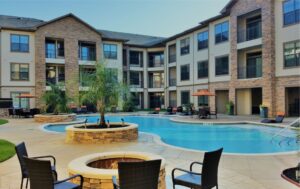
Ideal Population Density: Medium to high.
Design & Layout: Wrap buildings typically feature a parking structure surrounded by apartments, while podium buildings have a concrete base with parking on the lower level and residential units above.
Amenities: Modern facilities such as fitness centers, rooftop terraces, courtyards, and ground-floor retail spaces.
Pros:
- Efficient land use with a good balance of amenities.
- Blends urban and suburban living experiences.
Cons:
- Less open space compared to garden-style apartments.
- Higher construction costs due to complex designs and building codes.
Typical Locations: Urban neighborhoods, near transit hubs, and growing suburban areas.
Developer Insight: Incorporating mixed-use elements, such as ground-floor retail, can enhance the appeal of these developments, providing residents with convenient access to services and fostering a vibrant community atmosphere.
High-Rise Apartments
Definition: Buildings ten stories or more, designed to accommodate a large number of residents within a small footprint.
Ideal Population Density: High to very high.
Design & Layout: Equipped with elevators, secure entry points, and various unit configurations, often offering panoramic views and luxury penthouses.
Amenities: Extensive offerings such as doorman services, swimming pools, gyms, lounges, coworking spaces, and in-building retail and dining options.
Pros:
- Maximizes land use in dense urban centers.
- Provides extensive amenities and proximity to work, entertainment, and transportation.
Cons:
- Higher construction and maintenance costs.
- Potential for noise from neighboring units and less privacy compared to low-rise options.
Typical Locations: City centers, downtown areas, and densely populated neighborhoods.
Developer Insight: While high-rises offer impressive amenities and urban convenience, it’s crucial to incorporate design elements that foster community interaction, such as shared lounges and communal spaces, to mitigate the potential for resident isolation.
Emerging Typologies: Missing Middle Housing
Definition: A range of housing types between single-family homes and large apartment buildings, including duplexes, fourplexes, townhomes, and courtyard apartments. This development is sometimes also referred to as “Build-to-rent” or BTR and dwelling types range from exclusively single-family homes to a mixture of single-family homes, duplexes, fourplexes, and townhomes.
Ideal Population Density: Medium.
Pros:
- Offers diverse housing options catering to various income levels.
- Supports sustainable urban growth by increasing density without high-rise construction.
Cons:
- May face zoning and regulatory challenges in certain jurisdictions.
- Requires careful planning to ensure compatibility with existing neighborhood character.
Typical Locations: Transitional zones between single-family neighborhoods and urban centers.
Developer Insight: Embracing missing middle housing can address affordability concerns and meet the demand for diverse housing options, especially in rapidly growing urban areas. Many developers, including us at Arbor Rose Capital, have considered building a BTR community as this newly introduced multifamily asset class continues to gain in popularity.
Below is a brief summary of the pros and cons of various multifamily building typologies.
Multifamily Building Types – Pros & Cons Summary
| Type | Pros | Cons |
|---|---|---|
| Garden-Style (Low-Rise) | – Abundant green space and privacy – Suburban, community-friendly feel – Lower construction costs per unit | – Requires large land parcels – Car-dependent layout – Lower density yields |
| Wrap/Podium (Mid-Rise) | – Efficient land use – Good mix of urban/suburban amenities – Supports walkability and transit access | – Higher construction costs – Less open space – More complex code compliance |
| High-Rise | – Maximizes use of urban land – Extensive amenities – Proximity to work and lifestyle hubs | – Expensive to build and maintain – Potential for noise and reduced privacy – Can feel impersonal |
| Missing Middle Housing | – Blends into existing neighborhoods – Supports housing diversity – Encourages walkability | – Zoning and policy barriers – Limited scalability – May face resistance from residents |
Conclusion
Understanding the nuances of multifamily building types is essential for developers, investors, and urban planners aiming to create vibrant, sustainable communities. By aligning building typologies with population density levels and incorporating thoughtful design elements, we can meet the evolving needs of residents and contribute to the fabric of our cities.
At Arbor Rose Capital, our experience in developing multiple multifamily projects has underscored the importance of tailoring developments to their specific contexts, ensuring that each project not only meets market demands but also enhances the surrounding community.