
The Opportunity Zone program just became a permanent fixture of the tax code, and 2026 brings the first major overhaul since the program launched in 2018. For real estate investors and developers, the changes reshape both the timeline for new investments and the compliance burden that comes with them.
The Program Is Now Permanent
The One Big Beautiful Bill Act (OBBBA), signed in 2025, eliminated the Opportunity Zone program’s original sunset date and made it a permanent part of the tax code. That’s a meaningful shift: investors no longer have to race against an expiration deadline, and the program now operates on a rolling basis with recurring designation cycles going forward.
New Zone Designations Are Coming in 2027
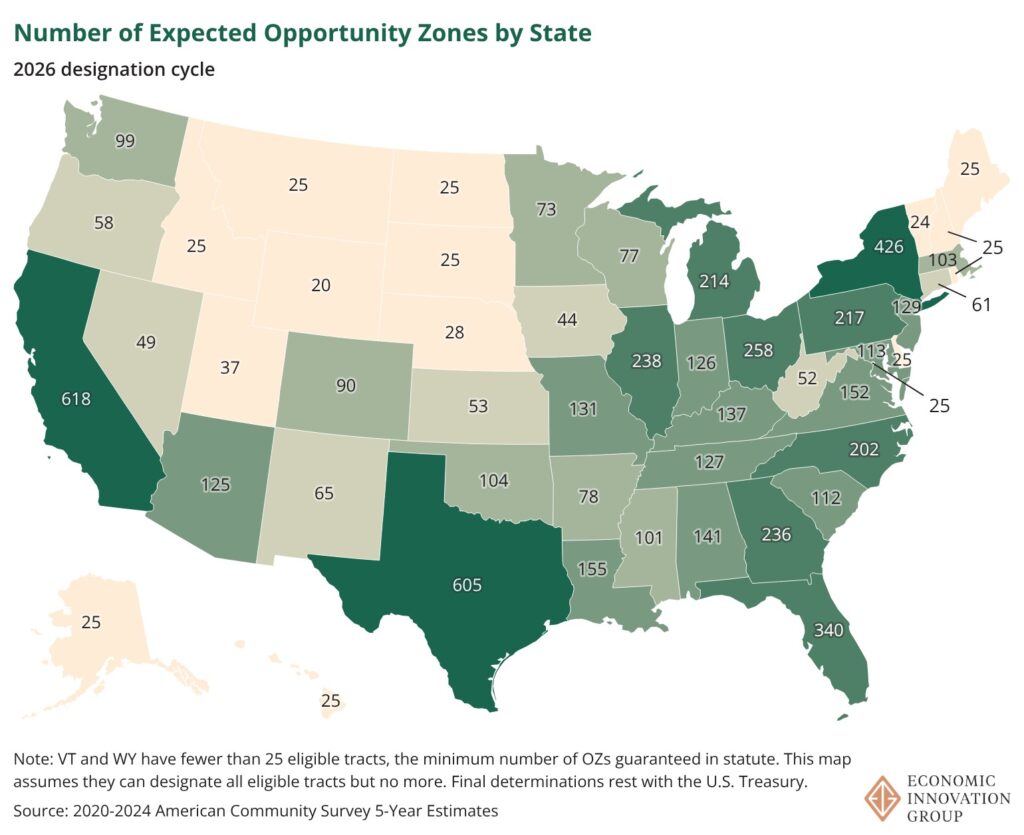
States will nominate a new round of Opportunity Zone tracts on July 1, 2026, with the updated map taking effect January 1, 2027. Zones designated under the original 2018 rules remain valid through December 31, 2028, so there’s a transition window where both the current and next-generation zone maps matter for underwriting.
One change worth flagging for site selection: the income threshold for a census tract to qualify as “low-income” is dropping from 80% to 70% of area median family income. That tightens the pool of eligible tracts and will likely push some previously-qualifying areas out of the next map.
Rolling Deferral and a New Basis Step-Up
For investments made after December 31, 2026, capital gains deferral now works on a rolling five-year basis rather than the fixed 2026 deadline that applied under the original rules. Investors also get a basis step-up: 10% for a standard Qualified Opportunity Fund (QOF) investment, and 30% for investments in designated rural opportunity funds, which is a meaningful incentive shift toward rural development.
Reporting Requirements Just Got Stricter
Qualified Opportunity Funds now face new annual reporting requirements, with penalties for noncompliance reaching up to $50,000 depending on the size of the fund. This is a real operational shift for sponsors: OZ investing is no longer a “set it and forget it” structure, and fund administration needs to be built into the underwriting from day one.
What This Means for Investors
Permanence is a genuine positive for long-term real estate investors: it removes the artificial urgency that pushed capital into deals before understanding whether the location and sponsor were actually right. But the tighter income thresholds, new reporting obligations, and looming 2027 zone remap mean this isn’t a program you can evaluate once and set aside. Sites that qualify today may not qualify under the next map, and funds that aren’t prepared for the new compliance requirements are taking on real financial risk.
At Arbor Rose Capital, we’re watching the 2026 designation cycle closely as we evaluate new development sites in the Houston market, and we’ll continue to factor OZ eligibility into our site selection process where it aligns with the fundamentals of a deal.